


The new Minister of Migration and Asylum, Thanos Plevris, as well as the three new Deputy Ministers, Haris Theocharis, Yiannis Andrianos and Christos Dermentzopoulos, arrived at the Presidential Palace shortly before 10 a.m. (Greek time) for their swearing-in ceremony, which took place in front of Prime Minister Kyriakos Mitsotakis. During his visit, the new Minister of Migration and Asylum stressed that "The main goal is to increase the returns of illegal immigrants and to combat illegal immigration", while he made it clear that anyone who enters our country illegally will not be legalized and that the "seven-year regulation" will be abolished.
HDN Newsroom
The new minister and the three deputy ministers replace the resigned Makis Voridis, Dionysis Stamenitis, Tasos Hadjivassiliou and Christos Boukoros.

Thanos Plevris spoke of "a lot of work", stressing that "the main goal is to increase the returns of illegal immigrants and to combat illegal immigration". "Any policy that is in a fair and strict direction will continue," the Minister of Migration and Asylum added.

For his part, the new Deputy Minister of Rural Development, Yiannis Andrianos, after thanking the Prime Minister for the honor he had done him, spoke of "a lot of work and in a few words I will continue this". At the same time, he clarified that "those who illegally took money will be asked to return".
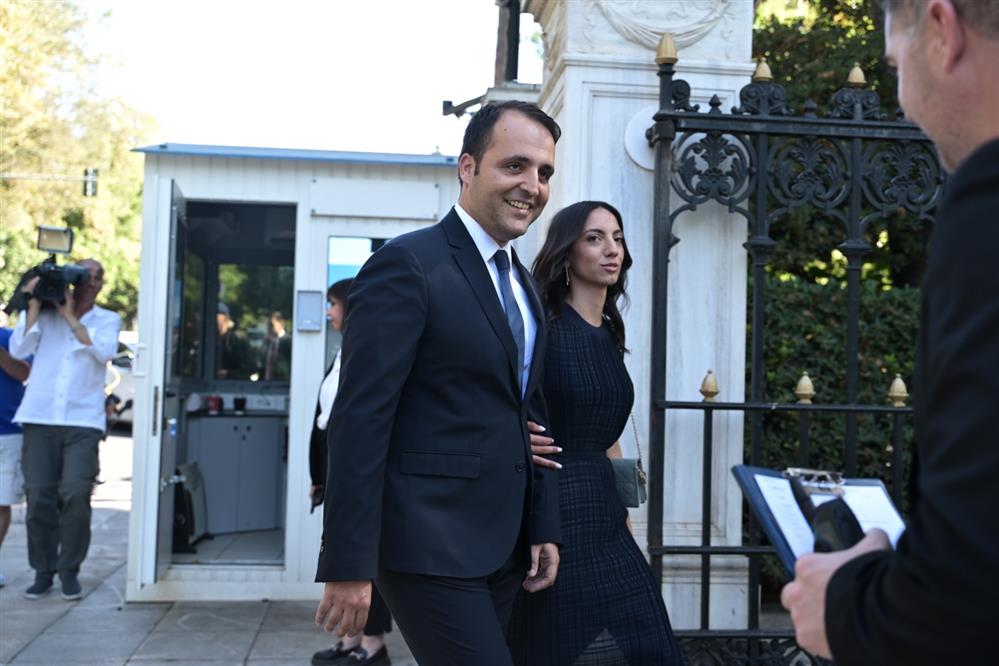
"The main goal and mission is to support real farmers of the hard work who are struggling," continued Mr. Andrianos, who noted about OPEKEPE that "the prime minister said everything and shows it with his actions."
Plevris: Tighter control of illegal immigration
The draft law on migration policy provides for the tightening of the framework for illegal immigration, with the main axis being that no illegal migrant will be able to be legalized in the country, said the new Minister of Migration Policy and Asylum, Thanos Plevris, arriving at the Presidential Palace for the swearing-in of the new members of the government.
As he said, "the seven-year regulation is abolished", which until now allowed the legalization of someone who had remained in the country for seven consecutive years. At the same time, the return system is being strengthened, with the aim of faster removal of those who do not meet the conditions for stay: As Mr. Plevris stressed, "the message we are sending is clear: anyone who enters the country illegally will not be legalized and will not be entitled to asylum."
The goal, he underlined, is to prevent new irregular arrivals and to deconstruct the expectation of legitimacy through stay. “Anyone entering Greece illegally will either be returned to their country of origin or sent to prison.”


