


Once again, U.S. President Donald Trump is proving that he is not joking when he says something, and that he is determined to implement what he promised before the election, as any political leader who respects himself and his voters would. Thus, after the failed meeting with Ukrainian President Zelensky and in the wake of the meeting of the "powerful" of the West convened in London by the British Prime Minister - in the absence of the American President - President Trump is reportedly stopping US military aid to Ukraine. Something that, after all, 60% of Americans want. How long will Ukraine last without America's support? And how does this support translate into numbers?
HDN Newsroom
Trump administration made a bombshell announcement that it will stop funding for new arms sales to Ukraine.
The move weakens Ukraine in the fight against Russian forces, current and former U.S. officials said.
Just few days after President Trump and Ukrainian President Volodymyr Zelensky met at the White House, the US president will reportedly carry out his warnings to his Ukrainian counterpart and stop supporting Ukraine financially and armamentally in its war with Russia.
During their meeting, President Trump told the Ukrainian president that he was "flirting with World War III" and warned him that without U.S. help he had no hope of winning and that he was not alone, as he told Trump, reminding him that the U.S. had given him, until now, $350 billion and military equipment.
The tense Trump-Zelensky meeting on Friday (February 28th) sparked fears across Europe that the US could drift away from the broader Western alliance.
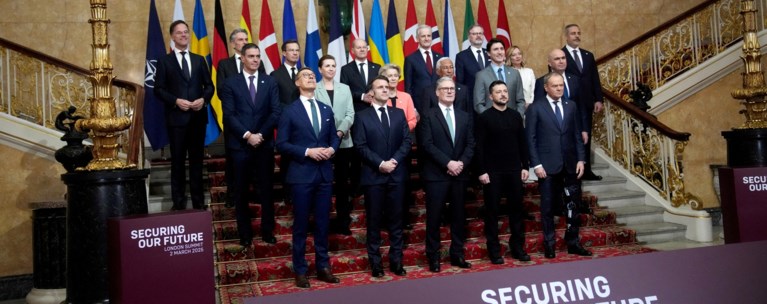
The London meeting of the Western alliance "powerful"
Immediately after the Trump-Zelensky meeting, British Prime Minister Keir Starmer decided to convene an emergency meeting of selected European leaders – from whom Greece was absent, as there was no invitation to the Greek Prime Minister – while Canadian Prime Minister Justin Trudeau and Turkish Foreign Minister Hakan Fidan were also present.
It is worth remembering, of course, that Britain does not even belong to the European Union after Brexit, which was implemented on 31 January 2020, 23:00 local time (00:00 CET on 1 February 2020).
At Lanskaster House, London, Keir Starmer welcomed 15 leaders to the summit on Ukraine and security in Europe.
Emmanuel Macron arrived first and Polish Prime Minister Donald Tusk second. They were followed by NATO Secretary General Mark Rutte and Swedish and Czech Prime Ministers Ulf Kristersson and Petr Fiala. European Commission President Ursula von der Leyen arrived at the venue shortly before 3:30 a.m., followed by Canadian Prime Minister Justin Trudeau, German Chancellor Olaf Scholz and Turkish Foreign Minister Hakan Fidan. The arrival of Volodymyr Zelensky was recorded at 16.00 Greek time, followed by the Spanish Prime Minister.
"We are gathered here today because this is a unique moment for Europe's security and we must all mobilise," Starmer said, even though his country has nothing to do with Europe anymore, as the British themselves decided, so all this British meddling in European affairs is at least. misplaced. After all, the British never do anything if they do not have their own benefit, as you know.
Finding a proper solution for Ukraine is "crucial for the security of every country here and many others as well," he added, addressing his Canadian counterpart. President Trump has said he wants Canada to join America and become the 51st U.S. state.
What did they decide in London? Continue to support Ukraine and increase their arms spending, in short.
Italian Prime Minister Giorgia Meloni, who is particularly sympathetic to President Trump, said she opposed the decisions and opposed sending troops to Ukraine - as France proposed - and remained "sceptical" about the Franco-British "solution" as she believed it should not upset Europe's relations with the United States.
"The Europeans decided in London to continue the war in Ukraine. Hungary remains on the side of peace," Hungarian Prime Minister Viktor Orban said.
The assessment that at the London summit with the participation of allies of Ukraine, the European leaders who took part decided that they want the war to continue was expressed by the Prime Minister of Hungary, Viktor Orban in a post on X (former Twitter).
While the "elite" leaders of the West were meeting in London, the US president was at his Mar-a-Lago resort.
And today, he announced that he is "ending" U.S. military aid to Ukraine.

How long will Ukraine last without the U.S. help?
The US president's blockade comes just 24 hours after his eventful meeting on Friday with his Ukrainian counterpart Volodymyr Zelensky. "This is not a definitive end of aid, but a pause," one U.S. official told Fox News.
The Trump administration ordered in late January to halt all foreign aid, including military aid, except to Israel and Egypt, without exception.
Without new U.S. military assistance, Ukraine likely has enough weapons to continue fighting Russia at its current pace through the middle of this year, current and former Western officials say.
If the disruption of U.S. aid continues, Ukraine will lose supplies of some sophisticated weapons, including advanced air defense systems, surface-to-surface ballistic missiles, navigation systems and long-range rocket artillery.
The U.S. is the sole producer of certain systems, including the Army Tactical Missile Systems or ATACMs and the M142 or Himars High Mobility Artillery Missile System, which give the Ukrainians the ability to strike far behind Russian lines.
Once these U.S. supplies are depleted, Ukraine's ability to conduct longer-range strikes and protect its own rear positions will suffer, officials and analysts say.
At the same time, U.S. assistance has been invaluable not only in terms of armaments, but also in terms of operations and intelligence.
AFP cited an analysis of the main deliveries of military aid to Ukraine, according to a list provided by the State Department on Jan. 20.
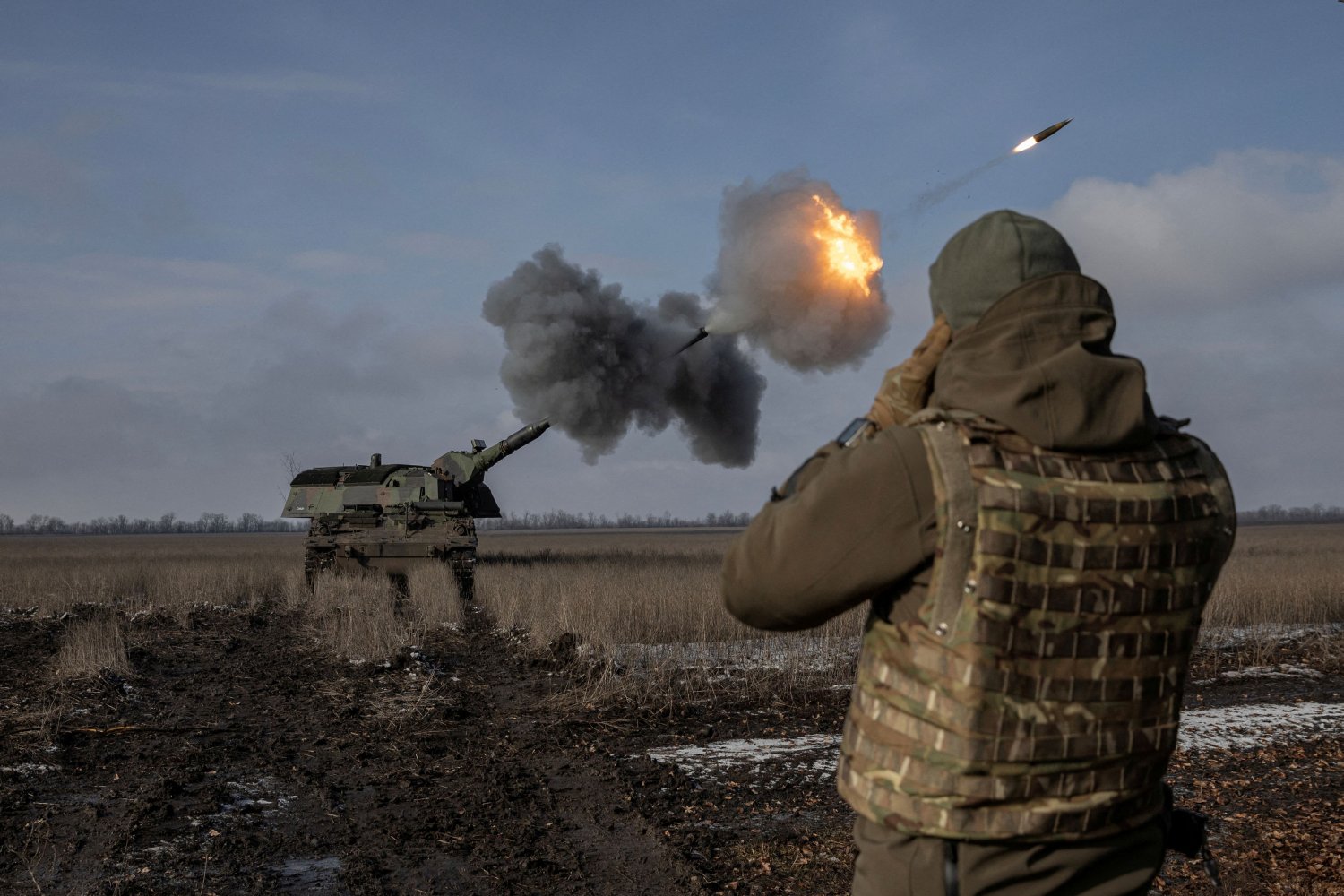
U.S. aid in numbers
The US is by far the largest donor of military aid to Ukraine, providing weapons, equipment and financial support.
Between the beginning of 2022 and the end of 2024, they gave €69 billion. dollars in military aid, according to the German think tank Kiel Institute.
Given the relentless air attacks by Russian forces, Washington was sending Kiev increasingly sophisticated air defense hardware, in particular three Patriot air-to-surface missile batteries. European allies have also provided such systems to Ukraine.
Other defense systems on the U.S. list include 12 Nasams as well as Hawk systems and ammunition and more than 3,000 Stinger anti-aircraft missiles. To improve their effectiveness, 21 aerial surveillance radars were provided, as well as equipment integrating Western launchers and missiles into Ukraine's systems.
Washington has sent more than 200 155mm howitzers along with three million matching rounds, 72 105mm howitzers and a million shells and over 700,000 mortars. Over 40 Himars, rocket launchers mounted on light armored vehicles, were delivered along with the corresponding ammunition.
Washington also gave Ukraine at least 10,000 Javelins, anti-tank missiles that became symbols of Ukrainian resistance against the Russian invasion in the first weeks of the war.
Over 120,000 other anti-tank weapons were delivered, as well as 10,000 Tow anti-tank missiles.
As for smaller weapons, more than 500 million bullets for small arms and grenades were delivered to Ukrainian soldiers.
The Pentagon has so far refused to send its warplanes to Kiev, but the Biden administration has provided 20 Soviet-made Mi-17 military helicopters. It also delivered many different models of drones.
Washington delivered a total of 31 Abrams, the most advanced U.S. heavy tanks, in January 2023. Forty-five Soviet-made T-72B tanks were also sent.
The State Department's list also includes 300 Bradley combat vehicles, 1,300 armored personnel carriers, more than 5,000 Humvee military vehicles and 300 armored ambulances.
Washington provided more than 100 patrol boats, coastal defense systems, Claymore mines, satellite communication systems, night vision goggles and more than 100,000 sets of armor.
The above figures date back to January 20, the final hours of the Biden administration. Since Trump took office later that day, Washington has continued to deliver to Ukraine what one U.S. defense official called "critical munitions" approved by the previous administration, including anti-tank weapons and artillery shells.


